How to Manage the Brisket Stall
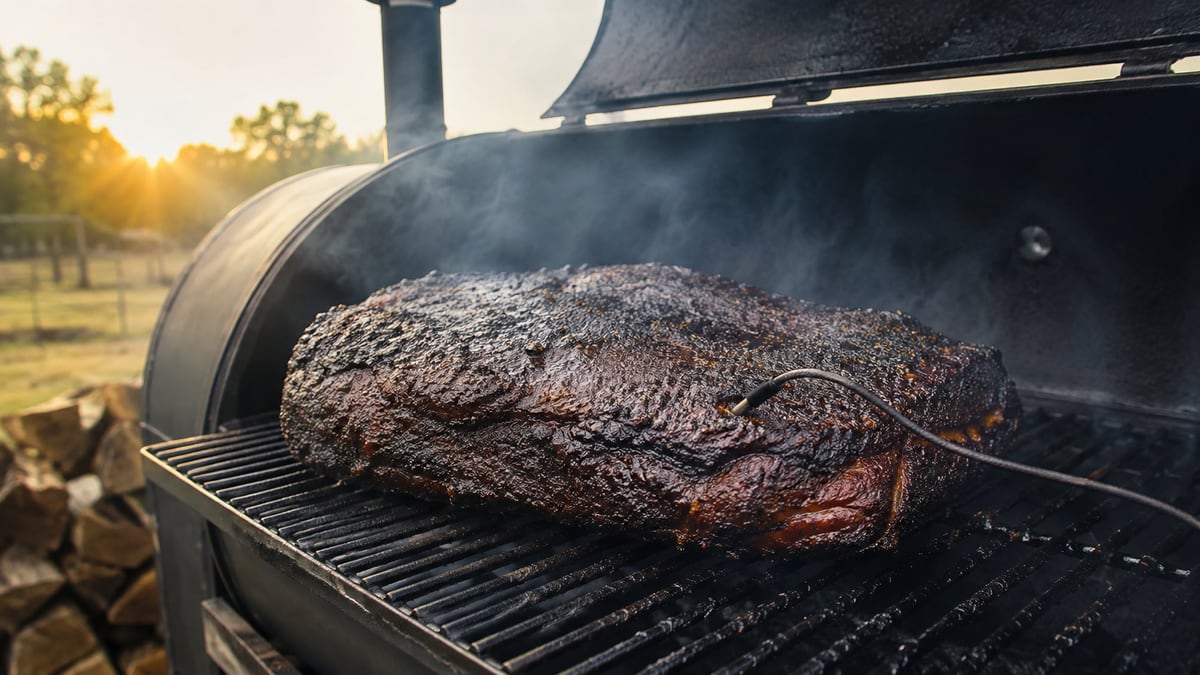
You've had the brisket on since before sunrise. It climbed all morning, and then somewhere around 155°F it just stopped. Twenty minutes pass. Then an hour. Same number. You start side-eyeing the fire, the thermometer, your own life choices. Don't. This is the stall, every brisket does it, and you didn't break anything.
What the stall actually is
A brisket is roughly two-thirds water. As it heats, that moisture works its way to the surface and evaporates, and evaporation pulls heat away, the same chill you feel stepping out of a pool on a breezy day. For a few hours, the cooling from all that surface moisture almost perfectly matches the heat your smoker is pushing in. The two cancel out, and the internal temperature just sits there.
So the stall is your brisket sweating, and the sweat is doing its job a little too well. Once enough surface moisture has cooked off, evaporation slows down, the heat starts winning again, and the temperature climbs the rest of the way to done. Nothing about your fire or your meat is broken. It's physics, and eventually physics is on your side.
It's not the collagen rendering
You'll hear that the stall is the fat and collagen "soaking up energy" as they break down. It sounds reasonable, and it's wrong. Greg Blonder, a physicist who studies barbecue, tested this by cooking briskets in dry versus humid pits, and the stall tracked the humidity, not the connective tissue. Seal a brisket so it can't evaporate and the stall nearly disappears. That one fact is why every fix below works the way it does, so it's worth getting straight before you go chasing the wrong problem.
How to tell you're really in it
First, make sure you're reading the right thing. The dome thermometer on the lid measures hot air, not meat, so ignore it here. You want a probe buried in the thickest part of the flat, away from the point and not poking out near an edge. A real stall reads as a flat line, or a crawl of a degree every fifteen or twenty minutes, usually somewhere in the 150°F to 170°F range. If the number is still ticking up steadily, you're not stalled. You're just cooking, and you should leave it alone.
This is where a fast instant-read pays for itself. You can spot-check the flat in a second instead of standing over an open pit watching heat pour out, and it'll catch the stall breaking before a leave-in probe has fully caught up.
Your three options
There are three honest ways through the stall, and none of them counts as cheating. Pick based on how much clock you have left and how much you care about bark.
1. Wait it out
Do nothing. Hold the pit steady around 225°F to 250°F, keep the lid shut, and let the brisket grind through on its own. This is the bark lover's choice, because the surface keeps drying and firming the whole time instead of getting trapped under a wrap. The price is patience: a slow stall can eat three or four hours, so this only works if you started early. If you're not sure what "early" means for your brisket, run the weight through the brisket calculator and it'll back the start time out from when you want to eat.
2. Wrap it
Follow the step-by-step wrapping instructions for a snug wrap, or compare foil and paper in the brisket calculator before choosing.
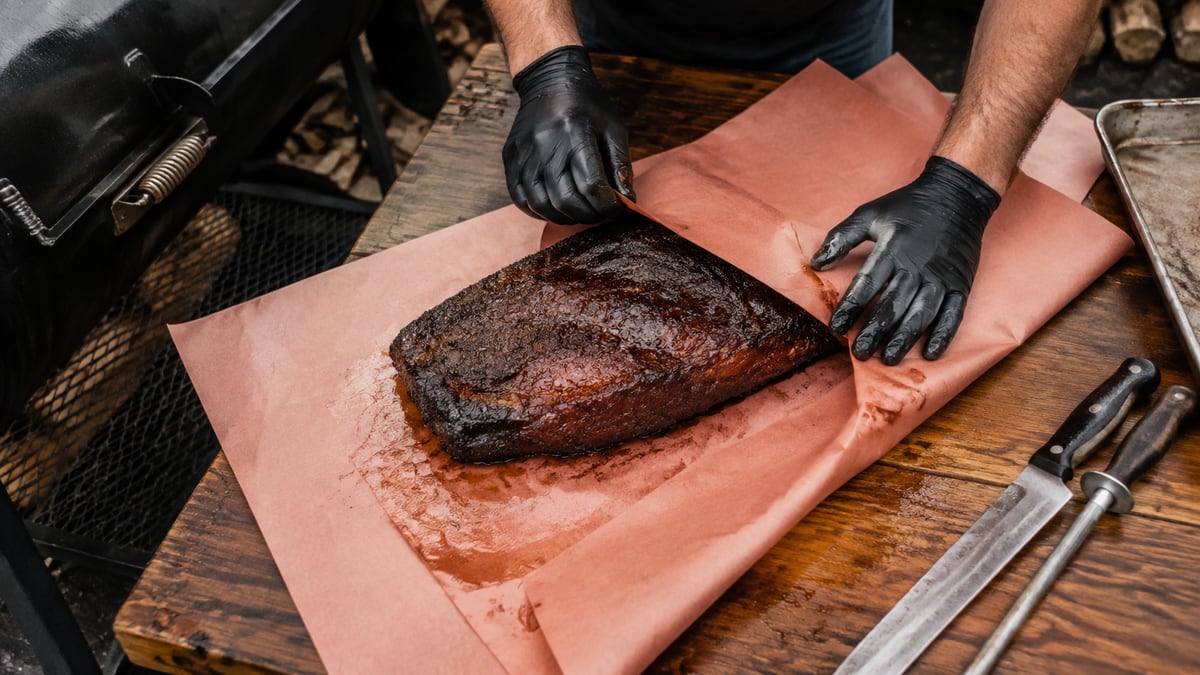
Wrapping shuts down the evaporation, so the stall basically vanishes and the temperature starts climbing again within the half hour. Foil is fastest because it seals tight, but it also traps steam and softens the bark you spent hours building. Butcher paper is the one I reach for: it blocks most of the cooling but still breathes a little, so the bark stays firm. Don't wrap by the number. Wrap when the bark is dark and stays put under your finger, which usually lands you somewhere in the stall, then wrap it snug.
3. Run the pit hotter
You can also just give the brisket more heat than the evaporation can shed. Bumping from 225°F to 275°F shortens the stall with no foil or paper at all. You trade away a little of the texture a long, slow cook builds, but I won't treat 275°F like a sin. I've eaten plenty of brisket off a hotter pit and gone back for more. When the clock is tight and you'd rather not wrap, this is the move.
How long it lasts
If you ride it out, plan on two to four hours for a full packer at 225°F. A small flat on a hot pit can clear it sooner, and a big packer on a cooler smoker can sit there a good while longer. Wrap it and you're usually looking at an hour or less. The exact number matters less than the mindset: the stall always ends. Pad your schedule and keep the lid shut. It'll climb again once it's done sweating.
One last thing, because it catches people off guard: when the stall finally breaks, the brisket can run from 165°F to tender in a hurry, so don't wander off now. Pull it when a probe slides in like it's going through warm butter, usually around 200°F to 205°F, and then rest it. An hour at the very least, two or three if your schedule allows. That rest is where a stressed-out, stalled brisket relaxes back into something worth the wait.
Brisket stall FAQ
How long does the brisket stall last?
Anywhere from one to six hours. Two to four is typical for a packer brisket at 225°F, and wrapping can cut it to an hour or less.
What temperature does the stall happen at?
Usually between 150°F and 170°F internal, where surface evaporation balances the heat entering the meat.
Should I wrap to beat the stall?
Wrap when the bark is set if you need speed. Foil is fastest, while butcher paper keeps more bark texture.