Best Smoke Days in Kansas City, MO
Kansas City, Missouri sits in the South Central barbecue region. Kansas City is the home of burnt ends, caramelized cubes off the point of a packer brisket, and the regional sweet tomato-and-molasses sauce that defines KC barbecue worldwide. This page scores the next seven days for low-and-slow cooks in the Kansas City metro, weighing rain probability, sustained wind and gusts, daytime temperature, and the wet-bulb humidity that drives the stall. It then weights the result for your cut and cooker, so you can pick the day with the best odds of a clean cook.
7-day forecast for Kansas City
Planning a weekend smoke in Kansas City
Kansas City sits at the edge of the Great Plains, and wind is its signature variable. Spring drives strong frontal systems and severe-weather setups across Kansas and Missouri, often with gusts that pull a pit off temperature; summer turns hot and humid; winter is cold and, again, frequently windy. The calmest, most dependable cooking comes in the late-spring and early-fall lulls between the storm seasons, when the air settles and the humidity eases.
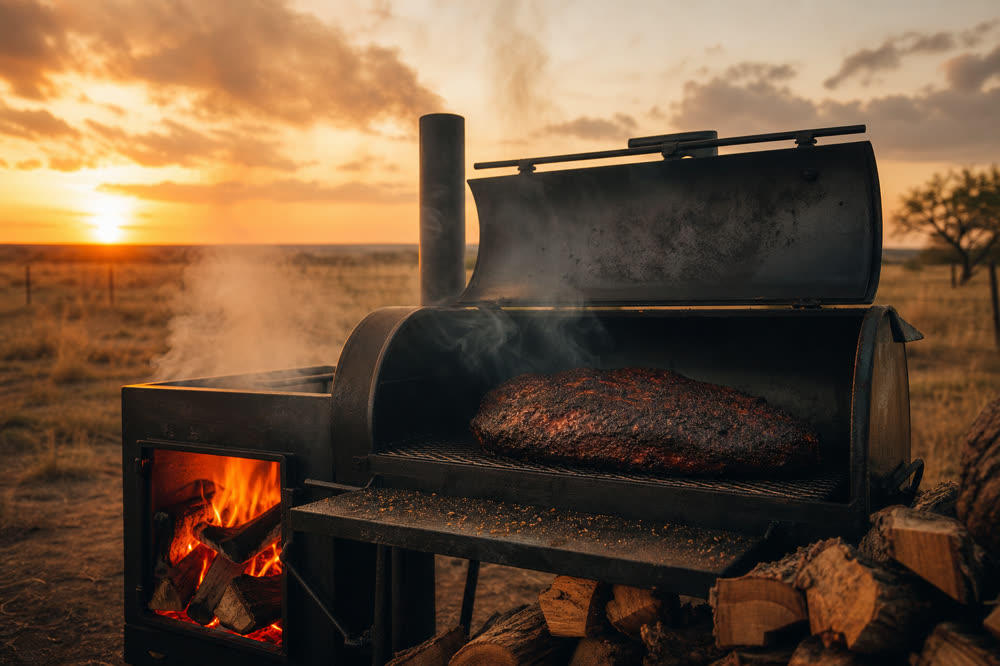
Gust speed decides more KC Saturdays than rain or cold, so the wind forecast is the first thing to check before a long cook. The offset stick burner, still the regional standard, wants a solid wind break and heavier woods like hickory and oak that carry smoke through a long, humid-summer stall; a pellet rig or kamado is the steadier choice on blustery days. Kansas City is where burnt ends got their start, the caramelized cubes off a brisket point, which means cooking the packer well past the stall and rewarding patience. Time those long cooks for the low-wind windows the score flags, and let the insulated cooker handle the gusty ones.
Kansas City climate normals by month
Typical conditions for each month, scored 0-100 for a packer brisket on an offset, the most weather-sensitive low-and-slow cook. Temperature and rain days are NOAA 1991-2020 climate normals; wind and humidity are 2015-2024 reanalysis averages.
| Month | Avg High | Avg Low | Avg Wind | Humidity | Rain Days | Smoke Score |
|---|---|---|---|---|---|---|
| January | 39.9°F | 22.2°F | 8.0 mph | 69% | 2.2 | 69 |
| February | 45.1°F | 26.4°F | 8.4 mph | 64% | 2.7 | 71 |
| March | 56.6°F | 36.2°F | 8.9 mph | 66% | 4.6 | 74 |
| April | 66.8°F | 46.3°F | 9.1 mph | 63% | 6.5 | 73 |
| May | 76.2°F | 57.2°F | 7.7 mph | 71% | 7.7 | 73 |
| June | 85.8°F | 67.2°F | 7.1 mph | 68% | 7.5 | 73 |
| July | 90.2°F | 71.9°F | 6.1 mph | 71% | 6.2 | 71 |
| August | 88.6°F | 69.9°F | 6.3 mph | 71% | 5.5 | 73 |
| September | 80.4°F | 61.0°F | 7.0 mph | 68% | 5.7 | 77 |
| October | 68.2°F | 48.7°F | 8.2 mph | 64% | 4.8 | 77 |
| November | 54.5°F | 36.3°F | 8.1 mph | 69% | 3.4 | 76 |
| December | 43.9°F | 26.7°F | 8.1 mph | 70% | 2.8 | 71 |
Historically, the best months to smoke in Kansas City are September, October, and November. April is the windiest month (avg 9.1 mph): the one to plan around.
Kansas City’s smoke season, month by month
Kansas City’s spring (March–May) is strong, scoring 73 on 67°F highs, 47°F lows and wind near 8.6 mph as the stall digs in and holds. In summer (June–August), Kansas City rates 72/100, a strong window with 88°F days, 70°F nights and 6.5 mph of wind as the plateau runs long and flat. Kansas City in fall (September–November) grades strong at 77/100: highs near 68°F, lows near 49°F, wind about 7.8 mph as a stubborn stall settles over the cook. Through winter (December–February), Kansas City runs strong: a 70 score off 43°F highs, 25°F lows, and 8.2-mph wind as the stall digs in and holds.
The numbers favor September (77) in Kansas City and warn off January (69) where the plateau runs long and flat.
Count it up and Kansas City lands 11 of 12 months at Good or better, best in September at 77, though none crack the 85 Ideal mark.
A summer 72 on stall risk means brisket and pork butt want extra hours in Kansas City; keep a wrap handy and let a kamado run the stall. From January, Kansas City lows near 22°F starve an open fire; a sealed kamado or pellet cooker is the practical winter long-cook.
Barbecue heritage
Kansas City is one of the genuine capitals of American barbecue. The tradition here grew from the city’s slaughterhouse history: every cut got slow-smoked over hickory, which is how burnt ends emerged from brisket points. The sauce is sweet, thick, and tomato-molasses-based, anchoring a style imitated nationwide. Kansas City treats nearly any cut (brisket, ribs, pulled pork, smoked turkey) as worthy of the pit, and the regional competition circuit is among the most active in the country.
Kansas City climate
South-Central weather sits at the intersection of Gulf moisture and continental dry air. Summer afternoons run hot and either humid (Louisiana, east Texas, eastern Oklahoma) or dry (west Texas, west Oklahoma). Spring brings strong frontal-line storms and very high wind. Winter is mild compared to the Midwest but the wind almost never quits, and an offset stick burner here lives by the gust forecast. Long stalls in summer humidity are the textbook condition the wet-bulb weighting was built for.
In Kansas City, the normals bear this out: April is the windiest month at 9.1 mph, while September scores highest for low-and-slow at 77 of 100.
Cooker fit for Kansas City
South-Central pitmasters live with wind, and the offset stick burner remains the regional standard despite it. Build a wind break, watch the gust forecast, and lean toward heavier woods (post oak, hickory) that can hold smoke through long stalls. A pellet or kamado is a practical second cooker for the windiest weekends.
Kansas City grades Good or better in 11 of 12 months; on the windiest weekends, plan for gusts near 13 mph and let an insulated cooker carry the long cuts.
Pick a day with a strong score, light the fire, and stop guessing whether Saturday in Kansas City will hold. The form lets you swap cut and cooker without leaving the page, and your selection persists across visits via local storage. ZIP defaults to 64108 for the Kansas City metro; change it any time to score a different yard.
Frequently asked questions
What makes a day a good smoke day in Kansas City?
Which cooker works best in Kansas City?
How accurate is the Kansas City forecast?
Forecasts model regional weather, not your microclimate. Trees, structures, and elevation can shift wind and temperature noticeably from the airport-grade source we pull. Always step outside before lighting the fire.